The Plasticity of Longevity: Rewiring the Aging Brain for Peak Executive Output

As a top performing executive, you operate in an environment where peak cognitive performance—your information processing, working memory, and mental agility—is your greatest asset. However, a significant blind spot exists in current executive health optimization. While you likely track your cardiovascular, metabolic, and physical metrics with precision, cognitive stamina is often relegated to a static baseline, an assumption that fails to account for the reality of neurological aging. Treating your brain as a fixed constant rather than a dynamic, trainable system is a strategy that leaves your most important competitive advantage at risk.

Executive undergoing visual-cognitive evaluation with stroboscopic eyewear at Neuro Performance Center in Surprise AZ.

When cognitive fatigue inevitably degrades prefrontal processing speed, standard practice relies on central nervous system stimulants or pharmaceutical sleep aids. These interventions mask neurological taxing and exhaustion without addressing the underlying structural degradation of prefrontal cortical networks.

Infographic showing the executive cognitive gap between physical fitness training and unaddressed prefrontal cortical degradation.
Figure 1: Treating cognitive stamina as a static baseline leads to reactive stimulant use rather than targeted neuroplastic adaptation.

The prefrontal cortex (PFC) exhibits earlier and steeper age-related structural decline than motor or primary sensory cortices. Reductions in gray matter volume, synaptic density, and microvascular perfusion directly impair the neural networks responsible for top-down executive control (Raz et al., 2005).

Treating cognitive fatigue as a chemical deficiency rather than a neuroplastic conditioning gap results in accelerated burnout and compromised long-term cognitive reserve. 

Preserving decision-making speed and establishing resistance to cognitive decline requires combining progressive cognitive loading with real-time autonomic nervous system regulation. Physical conditioning alone cannot shield prefrontal processing networks from degradation; targeted neurocognitive training is necessary to maintain neural plasticity across an aging executive brain.

The Science of Aging and Executive Performance

Let’s look at the neuroscience that drives executive functioning in your brain. Executive function depends on the structural integrity of the dorsolateral prefrontal cortex (dlPFC) and the anterior cingulate cortex (ACC). These structures execute working memory management, impulse inhibition, and strategic attentional allocation. Beginning in the fourth decade of life, the PFC undergoes structural shifts: dendritic spines retract, synaptic connections thin, and localized microvascular perfusion decreases (Arnsten, 2009).

Simultaneously, the locus coeruleus-norepinephrine (LC-NE) system and mesocortical dopaminergic projections experience age-related reductions in receptor sensitivity and neurotransmitter synthesis. Optimal catecholamine levels (dopamine and norepinephrine) must bind to high-affinity alpha-2A adrenoceptors and D1 receptors in the dlPFC to sustain persistent neural firing during complex cognitive operations (Arnsten, 2009).

When stress or aging disrupts catecholamine equilibrium, prefrontal microcircuits experience a reduced signal-to-noise ratio. This degradation manifests clinically as increased distractibility, information processing delays, and reduced mental flexibility under stress.

Diagram illustrating structural and neurochemical shifts in the aging prefrontal cortex under stress.
Figure 2: Structural atrophy and catecholaminergic decline converge to reduce prefrontal signal-to-noise ratio and increase executive latency.

Sensory-Motor Integration and Visual-Vestibular Processing

Cognitive speed relies directly on oculomotor control and visual integration. Over 50% of the human cerebral cortex engages in visual processing, gaze stabilization, and spatial orientation. The visual-vestibular-autonomic loop operates as the primary sensory gate for executive execution:

$$\text{Retinal Input} \longrightarrow \text{Superior Colliculus} \longrightarrow \text{Frontal Eye Fields (FEF)} \longrightarrow \text{dlPFC}$$

Poor sensory input corrupts strategic decision making and performance. Age-related delays in saccadic accuracy, visual pursuit alignment, and contrast sensitivity degrade the inputs fed into the prefrontal cortex. When visual processing efficiency slows, the PFC must redirect valuable attentional bandwidth to basic spatial stabilization, reducing the metabolic energy available for high-level reasoning and risk assessment (Park & Reuter-Lorenz, 2009).

Cognitive Reserve and the Scaffolding Theory of Aging (STAC-r)

Building long-term neurological resilience requires expanding cognitive reserve—the brain’s capacity to optimize performance through alternate neural pathways when primary networks face structural strain. Under the Scaffolding Theory of Aging and Cognition (STAC-r), the brain adapts to biological changes by recruiting compensatory neural scaffolding (Park & Reuter-Lorenz, 2009).

Lab Note: Prefrontal Resource Allocation

High-performance execution requires minimizing the metabolic cost of spatial orientation. When visual-vestibular processing slows, the prefrontal cortex expends excess metabolic resources on basic environmental tracking, compromising the bandwidth needed for executive decisions under operational stress.

Targeted, non-repetitive cognitive-motor challenges stimulate this scaffolding. Subjecting the nervous system to visual-cognitive tasks while managing physical or autonomic strain triggers Activity-Dependent Synaptogenesis and systemic expression of Brain-Derived Neurotrophic Factor (BDNF) (Erickson et al., 2011). This biological cascade strengthens prefrontal networks, preserving processing speed and decision accuracy throughout the lifespan.

This doesn’t just improve short-term performance, but strengthens executive networks that support long-term cognitive capability and healthspan. 

Real-World Evidence: Quantifying Executive Performance Gains

At the Neuro Performance Center in Surprise, Arizona, we evaluate tactical operators, elite athletes, and executive leaders using closed-loop diagnostic protocols. Rather than separating physical capacity from mental output, our diagnostic battery measures visual-motor integration, executive processing speed, dynamic oculomotor control, and autonomic balance under high cognitive load.

Longitudinal Diagnostic Case Data (2-Year Tracking)

To quantify the impact of systematic neurocognitive loading combined with autonomic regulation, we tracked an executive client at our Surprise, AZ center over a two-year period (December 2023 through February 2025). Diagnostics were collected on the Senaptec Sensory Station to establish percentile rankings against a normative database of elite performers.
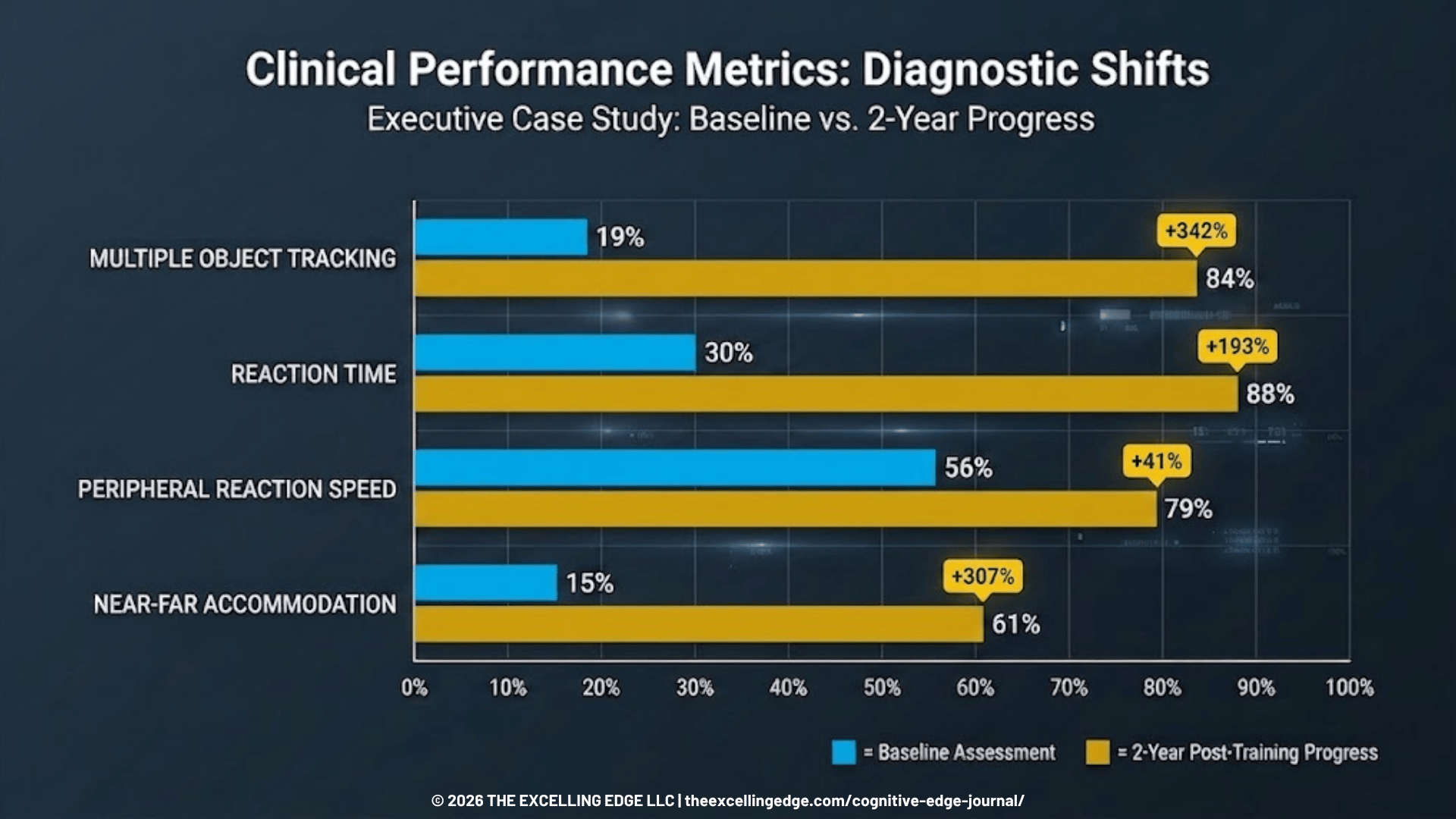
Figure 3: Diagnostic evaluation data from the Neuro Performance Center in Surprise, AZ, tracking client percentile gains over 24 months.

Diagnostic Shifts & Clinical Analysis:

  1. Multiple Object Tracking (MOT) & Dynamic Attention: In December 2023, the client scored in the 19th percentile for MOT, indicating compromised spatial tracking and attentional resources under load. Following dual-task training incorporating stroboscopic occlusion and dynamic target identification, performance reached the 84th percentile by February 2025.
  2. Reaction Time & Neural Efficiency: Initial assessments measured total reaction time in the 30th percentile. By February 2025, total reaction speed reached the 88th percentile (346 ms overall latency; 366 ms dominant, 325 ms non-dominant), reflecting increased transmission velocity along corticospinal pathways.
  3. Peripheral Processing & Oculomotor Control: Peripheral reaction speed advanced from the 56th to the 79th percentile (751 ms response latency), while Near-Far Quickness moved from the 15th to the 61st percentile. Contrast sensitivity demonstrated a parallel shift from the 5th to the 34th percentile.

These longitudinal metrics confirm that prefrontal processing networks remain highly plastic in mature adults. Systematically overloading the visual-spatial processing loop while regulating autonomic stress restores processing latency and expands functional cognitive reserve.

Lab Note: Autonomic Balance and Visual Capture

Maintaining high heart rate variability (HRV) under cognitive strain stabilizes prefrontal regulation. When sympathetic arousal overwhelms parasympathetic braking, visual search patterns become chaotic, increasing processing delays and errors in decision-making.

Operationalizing Neuro-Longevity: Your Daily Protocol

Translating these principles into daily routines requires protocols that combine autonomic control, oculomotor conditioning, and dual-task cognitive loading. This structured protocol strengthens prefrontal processing stamina and reinforces cognitive reserve.

[image 4 – protocol]

Phase 1: Autonomic Down-Regulation (Resonant Breathing) – Readiness

  • Objective: Establish vagal tone and balance catecholamine release prior to high cognitive loads.
  • Execution: Perform 5 minutes of resonant frequency breathing at 6 breaths per minute (4-second inhale, 6-second exhale) using real-time HRV biofeedback.
  • Mechanism: Resonant breathing amplifies Respiratory Sinus Arrhythmia (RSA), increasing vagal afferent signals to the nucleus tractus solitarius and stabilizing prefrontal circuits against stress-induced performance drops (Arnsten, 2009).

Phase 2: Dynamic Visual-Oculomotor Saccades – Priming

  • Objective: Drive regional blood flow to the Frontal Eye Fields (FEF) and associated prefrontal networks.
  • Execution: Position two visual targets 6 feet apart on a wall. Keeping the torso stationary, perform rapid, precise saccadic eye movements between targets for 60 seconds. Transition immediately to 60 seconds of smooth pursuit tracking (moving a target in a figure-eight pattern at arm’s length while maintaining continuous central visual focus).
  • Mechanism: Activates cranial nerves III, IV, and VI while stimulating frontoparietal attentional networks, raising baseline cortical readiness without elevating systemic stress hormones.

Phase 3: Dual-Task Cognitive Overload Protocol – Training

  • Objective: Induce cognitive-motor interference to stimulate synaptogenesis and expand cognitive reserve.
  • Execution: Combine a physical balance or movement challenge (e.g., single-leg stance on an unstable surface or multi-directional footwork) with working memory tasks (e.g., auditory 2-back tests or serial subtractions by 7s). Progress over time to introduce stroboscopic eyewear or dynamic target changes to increase visual processing demand.
  • Frequency: 10 to 15 minutes per session, 3 to 4 days per week.

Vector graphic detailing the dual-task cognitive loading protocol for brain plasticity and BDNF expression.
Figure 4: Combining motor tasks, cognitive load, and visual occlusion drives synaptogenesis and prefrontal scaffolding.

Cognitive resilience demands proactive conditioning. Don’t wait for noticeable slippage or symptoms to show up. To evaluate your baseline processing speed, visual-motor performance, and autonomic stress resilience, schedule an assessment with our expert human performance team.

Schedule Your In-Center Assessment at our Surprise, AZ Neuro Performance Center

References

The Longevity of the Elite Mind: Expanding Cognitive Capacity to Bulletproof the Executive Brain

Aging out is a choice. Discover how elite performance directors and high-net-worth executives are utilizing the same neurocognitive capacity expansion protocols as top athletes to bulletproof the Executive Brain—whether on the field or in the boardroom.

An older athletic executive wearing stroboscopic glasses in a high-tech lab, interacting with a digital touchscreen displaying a visual processing test over a pickleball court background, featuring a holographic 3D brain map.

The Success Penalty: The Hidden Cost of Cognitive Burnout

In the modern high-performance and longevity ecosystem, the narrative of age-related decline has undergone a radical transformation. Across professional sports and top corporate landscapes, we have successfully dismantled the physical bottlenecks of aging. Thanks to unprecedented advancements in biomechanics, regenerative medicine, hyper-customized load management, and precision nutrition, we can comfortably preserve the human chassis well into an individual’s late thirties, forties, and fifties.

Yet, a silent crisis persists at the apex of performance. We are keeping the physical engine pristine, but the central processing unit is lagging behind.

This is The Success Penalty. The very attributes that drive elite performers to the top—relentless focus, rapid context switching, continuous high-stakes decision-making, and an uncompromising work ethic—act as a progressive tax on the central nervous system. For the modern professional athlete enduring a grueling nine-month season, or the high-net-worth executive steering a global enterprise through macroeconomic volatility, professional success is systematically achieved at the cost of cognitive burnout.

Performance directors frequently monitor muscular readiness, heart rate variability (HRV), and soft-tissue status. However, the true failure point in longevity is rarely mechanical; it is cognitive. When an elite performer begins to lose their competitive edge, it is seldom because their muscles failed them. It is because their “Executive Brain”—the command-and-control center responsible for processing complex, dynamic environments—has experienced structural and metabolic erosion.

Aging out of your prime is no longer an inevitability dictated by the calendar. It is a failure of neural resource management. If you treat your brain as a fixed asset that merely requires “maintenance” or “rest” to survive, you are operating on a broken, outdated paradigm. To extend your operational timeline indefinitely, you must view your cognitive architecture as an adaptable system that can be systematically upgraded to handle exponentially higher workloads (which ultimately increases your cognitive reserve).

The Biology of the “Redline”: Glutamate and Neural Fatigue

To optimize an asset, you must first understand the biological constraints under which it redlines. For decades, the human performance industry treated mental fatigue as a vague, psychological construct—a lack of “grit” or a subjective feeling of being “drained.” 

Neuroscience has completely exploded this myth. Cognitive exhaustion is a hard, measurable biochemical limitation.

Every time you engage in effortful, high-computation executive processing, your brain pays a metabolic price. A definitive study published by Wiehler et al. (2022) mapped this exact phenomenon using magnetic resonance spectroscopy (MRS). The researchers discovered that prolonged, high-demand cognitive labor leads directly to an abnormal accumulation of glutamate—the brain’s primary excitatory neurotransmitter—in the synaptic gaps of the lateral prefrontal cortex (LPFC).

Under normal operational conditions, glutamate facilitates the rapid transmission of signals across synapses. However, when the prefrontal cortex is driven at maximum capacity for consecutive hours, days, or weeks without targeted clearance, glutamate pools in the synaptic clefts. This creates severe metabolic friction. To prevent localized excitotoxicity and cellular damage, the brain initiates a protective downregulation sequence, like applying a brake.

This sequence results in synaptic slowing. The physical symptoms of this neurochemical redline are stark and immediate:

  • A measurable delay in choice-reaction time.
  • A profound reduction in spatial awareness and visual processing speeds.
  • An involuntary shift toward low-effort, short-sighted, and impulsive decision-making.

When an athlete commits a critical turnover late in the match, or a CEO miscalculates a multi-million-dollar acquisition at the end of a long fiscal year, it is not a failure of character. It is a biological short-circuit. Their prefrontal cortex has chemically restricted their capacity to compute variables accurately. If your operational strategy relies entirely on sleeping off this level of neural overload, you are bringing a knife to a gunfight.

The Executive Brain: Shared Demands of Athletes and CEOs

The elite sports medicine community readily understands the cognitive load placed on a modern professional athlete. Consider a veteran quarterback standing at the line of scrimmage: within a 3-second window, they must scan a fluid visual field, filter out deafening auditory noise, recognize complex defensive coverages, anticipate player trajectories, and suppress an instinctual survival mechanism to deliver a precise throw.

This intense processing heavily taxes the three core pillars of executive function:

  1. Working Memory: The capacity to hold, manipulate, and update complex tactical patterns in real-time under extreme duress.
  2. Cognitive Flexibility: The ability to instantaneously switch strategies when environmental variables pivot without warning.
  3. Inhibitory Control: The neural discipline required to suppress a pre-programmed action or emotional reaction in favor of an optimized alternative.

When these functions are degraded by chronic neural fatigue, performance collapses. In an exhaustive systematic review, Sun et al. (2021) confirmed that cognitive fatigue profoundly impairs skilled performance and tactical execution across athletic populations. A delayed neural signal means physical speed becomes irrelevant; a perfectly conditioned body is useless if the command signal arrives milliseconds too late.

Now, look at the high-net-worth executive, founder, or investment professional. The corporate arena lacks the physical collision of the stadium, but from a neurocognitive perspective, the operational profiles are virtually identical.

The lateral prefrontal cortex does not distinguish between parsing an exotic zone blitz and evaluating a hostile corporate takeover during an unscheduled board meeting. Both tasks demand massive cognitive load, rapid context switching, and continuous risk assessment under pressure. The CEO’s field of play is built on shifting market data, regulatory changes, and interpersonal corporate warfare, and nearly everyday is game day.

The corporate executive is, in every sense, a cognitive athlete. Yet, while the professional sports world deploys an army of performance directors to manage its talent, the corporate athlete is often left to navigate chronic glutamate accumulation with nothing more than double-shot espressos and sleep apps. This is an unsustainable strategy for longevity. If you want to remain dominant over a multi-decade career, you must manage your cognitive load with the same empirical rigor used by Olympic performance directors.

The Shift: Neurocognitive Training as the Primary Architecture for Longevity

The standard answer to cognitive fatigue has always been passive recovery: take a vacation, sleep eight hours, step away from the desk. While rest is non-negotiable for metabolic clearance, it is fundamentally a defensive strategy. Passive recovery merely attempts to return your brain to its baseline state. It does nothing to change the baseline itself.

To win the longevity game, you must move from defense to offense. This requires a paradigm shift from maintenance to capacity expansion.

This is where Neurocognitive Training establishes itself as the primary architecture for longevity. We do not look at neurocognitive training as a remedial tool to “fix” a broken brain or a soft “wellness” app meant to de-stress. We define it as the intentional, progressive application of targeted cognitive stress designed to force structural and metabolic adaptations in the central nervous system.

It is critical here to draw a firm line between our framework of Progressive Cognitive Loading and standard Brain Endurance Training (BET).

Traditional BET protocols often rely on prolonged, repetitive, and intentionally monotonous computerized tasks (such as a 30-minute standard Stroop or psychomotor vigilance task) designed to induce pure psychological exhaustion before or during physical conditioning. While BET is effective for building raw mental stamina and increasing psychological grit, it lacks the multi-variable complexity required by true elite performers.

Progressive Cognitive Loading, by contrast, targets neural efficiency and processing capacity. We don’t just want a brain that can endure being tired for longer; we want a brain that requires less metabolic energy to perform elite tasks in the first place. By pairing high-demand executive processing tasks—such as stroboscopic visual occlusion, multi-object tracking, and complex choice-reaction drills – with sports-specific movements or executive high-pressure environments, we force the brain to optimize its communication pathways.

Through neuroplasticity, progressive cognitive loading drives the following structural adaptations:

  • Synaptic Efficiency: The brain streamlines its neural networks, utilizing fewer resources to execute the same volume of information processing.
  • Reduced Metabolic Trash: A highly trained, efficient brain produces significantly less glutamate per unit of time during high-stakes focus, effectively expanding the size of your cognitive “gas tank.”
  • Elevated Redline: By expanding your cognitive safety margin, the point at which your brain experiences synaptic slowing is pushed out, allowing you to maintain peak executive control long after your competition has defaulted to impulsive choices.

The Integrated Protocol: Building the Foundation

True cognitive longevity cannot exist in a vacuum. To build an indestructible mind, you must combine progressive capacity expansion with hyper-optimized metabolic clearance mechanisms. At The Excelling Edge, our protocols seamlessly fuse advanced neurocognitive load with the foundational physiological pillars of brain health.

PillarModalityPrimary Neurological MechanismTarget Performance Outcome
Capacity ExpansionProgressive Cognitive LoadingDriven by stroboscopic occlusion, multi-object tracking, and complex dual-task constraints.Streamlines neural pathways; dramatically reduces the volume of glutamate produced per hour of deep focus.
Metabolic FlushDeep Sleep ArchitectureGlymphatic system activation; deep, slow-wave sleep drives cerebrospinal fluid (CSF) through neural tissue.Rapidly evacuates accumulated glutamate, metabolic waste, and beta-amyloid plaques from synaptic spaces.
Noise ReductionNeuro-Regulated MindfulnessSuppresses the Default Mode Network (DMN); significantly dampens chronic, involuntary autonomic arousal.Minimizes non-essential neural activity, preventing unnecessary metabolic expenditure during off-hours.

The Sleep Architecture Blueprint

You cannot out-train a brain that is choked with metabolic waste. While neurocognitive training reduces the production of glutamate, high-quality sleep is the only mechanism that clears it.

During deep, slow-wave sleep, the brain’s glia contract, opening up the interstitial spaces and allowing the glymphatic system to pump cerebrospinal fluid through the brain tissue. This is the biological equivalent of a high-pressure power wash. It completely flushes the synaptic gaps of yesterday’s glutamate accumulation and neurotoxic debris. For our high-net-worth clients, we do not monitor sleep just for duration; we meticulously track sleep continuity and slow-wave architecture to ensure this metabolic flush occurs every single night without fail.

Mindfulness as Autonomic Engineering

In elite circles, mindfulness is frequently misunderstood as a soft emotional practice. In our architecture, it is treated as raw neural engineering.

The untrained elite brain is plagued by hyper-arousal—a constant, underlying hum of mental chatter, market anxiety, and strategic calculations handled by the brain’s Default Mode Network (DMN). This background noise burns an immense amount of ATP and generates steady streams of metabolic waste, even when you think you are resting.

Targeted mindfulness training teaches the prefrontal cortex to actively downregulate this network. By mastering the ability to switch off the neural noise on command, you preserve your cognitive capital for the moments that dictate your legacy.

Conclusion: Claim Your Cognitive Safety Margin

Capability trumps age. The concept that a professional athlete must retire at thirty-five or a brilliant corporate leader must step down at sixty because they have “lost a step” is an archaic relic of an unoptimized era.

Your chronological age is a fixed variable. Your cognitive longevity is an adjustable scale.

By shifting your paradigm from passive maintenance to aggressive neurocognitive capacity expansion, you protect your brain’s physical architecture, expand your processing speed, manage your metabolic redline, and isolate yourself from age-related cognitive decline. You do not leave your physical conditioning to chance; it is time to stop leaving your cognitive healthspan to chance.

At The Excelling Edge, we build the elite systems that ensure your mind remains your ultimate competitive advantage for the rest of your life.

Initiate Your Cognitive Longevity Assessment

Because our Remote 1-on-1 Cognitive Longevity Assessment is a highly bespoke, metrics-driven protocol, we review applications exclusively through direct, private inquiry.

If you are a Performance Director or high-net-worth executive ready to eliminate cognitive drag and extend your operational timeline, contact our founder directly to initiate the process.

In your inquiry, briefly state your current role, your longevity goals, and your primary cognitive bottlenecks. Our office will review your brief and respond within 48 hours to coordinate your screening.

References

Sun, H., Soh, K. G., Roslan, S., Wazir, M. R. W. N., & Soh, K. L. (2021). Does mental fatigue affect skilled performance in athletes? A systematic review. PLOS ONE.

Wiehler, A., Brignant, M., Meyer, C., Jollant, O., & Pessiglione, M. (2022). A neuro-metabolic account of why daylong cognitive work alters the control of economic decisions. Current Biology.

Wong, W. P., Coles, J., Chambers, R., Wu, D. B.-C., & Hassed, C. (2017). The Effects of Mindfulness on Older Adults with Mild Cognitive Impairment. Journal of Alzheimer’s Disease Reports.